
Suzuki Violin School, Volume 1 PDF: A Comprehensive Guide
Suzuki Violin School, Volume 1’s PDF versions are readily available online, offering convenient access to this foundational material for aspiring violinists and educators alike.
Numerous platforms host digital copies, including flip PDF versions published as early as December 23, 2018, providing a comprehensive resource for learning.
These PDFs often contain all 41 pages of the revised edition, enabling students to download and study the material offline, fostering a flexible learning environment.
What is the Suzuki Violin School?
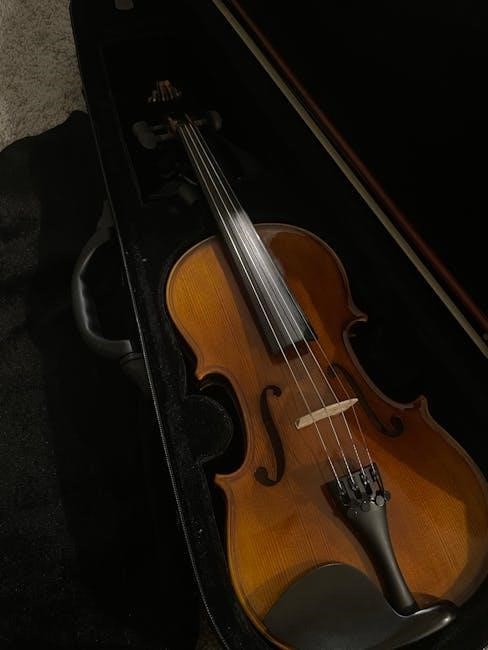
The Suzuki Violin School represents a globally recognized and influential method of music education, founded by Japanese violinist Shinichi Suzuki in the mid-20th century.
Unlike traditional approaches, the Suzuki method draws parallels between learning music and acquiring a native language – emphasizing immersion, repetition, and a nurturing environment.
Volume 1 serves as the cornerstone of this pedagogical system, introducing fundamental violin techniques and a carefully sequenced repertoire designed for young beginners.
This initial volume focuses on developing aural skills, proper posture, and basic bow control through iconic pieces like “Twinkle, Twinkle, Little Star” and “Lightly Row.”
The core philosophy centers on creating a positive learning experience, fostering a love for music, and building confidence in students from a very early age.
Access to Suzuki Violin School, Volume 1, often in PDF format, allows students worldwide to benefit from this time-tested and highly effective approach to violin instruction.
History of the Suzuki Method
Shinichi Suzuki developed the Suzuki Method in post-World War II Japan, observing that children readily learn their native language through immersion and repetition, without formal instruction.
He theorized that musical ability, like language, was not innate but could be cultivated in anyone through a similar approach, emphasizing early childhood education and a supportive environment.
Suzuki began teaching violin to children in his community, applying his linguistic principles, and witnessing remarkable results, proving his method’s effectiveness.
The first Suzuki Violin School materials, including Volume 1, were compiled and refined based on these experiences, becoming a structured curriculum.
The method quickly gained international recognition, spreading globally through teacher training programs and the widespread adoption of the Suzuki Violin School books.
Today, the availability of Suzuki Violin School, Volume 1 in PDF format continues to democratize access to this influential and historically significant musical pedagogy.
Key Features of Suzuki Violin School, Volume 1
Suzuki Violin School, Volume 1, available as a PDF, prioritizes aural skills development, encouraging students to learn by ear before tackling written notation—a cornerstone of the method.
The book introduces fundamental violin techniques gradually, focusing on correct posture, bow hold, and left-hand finger placement through carefully sequenced exercises.
A key feature is the emphasis on repertoire consisting of well-known and beloved children’s songs, making learning engaging and accessible for young beginners;
The PDF format often includes piano accompaniment parts, crucial for providing harmonic support and rhythmic stability during practice and performance.
The method’s holistic approach fosters musicality and sensitivity, nurturing a love for music alongside technical proficiency, making it a comprehensive learning tool.
Its structured progression and focus on repetition build a strong foundation for continued musical growth, as evidenced by its enduring popularity.
Content Overview: Pieces Included
Suzuki Violin School, Volume 1, in PDF format, centers around a carefully curated selection of pieces designed to build technique and musicality progressively.
The foundational piece, “Twinkle, Twinkle, Little Star,” is presented with numerous variations, allowing students to explore different bowing styles and finger patterns.
“Lightly Row” introduces simple harmonies and encourages ensemble playing, fostering a sense of musical collaboration and rhythmic precision.

“Song of the Wind” develops legato playing and expressive phrasing, enhancing the student’s ability to convey emotion through music.
“Go Tell Aunt Rhody” provides opportunities to practice shifting and more complex fingerings, expanding the student’s technical capabilities.
These pieces, readily accessible within the PDF, form the core of the Volume 1 curriculum, building a solid foundation for future musical endeavors.
Twinkle, Twinkle, Little Star Variations
Within the Suzuki Violin School, Volume 1 PDF, the “Twinkle, Twinkle, Little Star” variations are central to early development, offering a progressive learning experience.
These aren’t simply repetitions; each variation introduces new technical challenges, starting with basic bowing and finger placement on the violin.
Students gradually encounter variations focusing on different rhythms, dynamics, and articulation, building a strong foundation in musical expression.
The PDF allows for easy access to these variations, enabling students to practice specific techniques repeatedly and refine their skills.
This methodical approach, characteristic of the Suzuki method, ensures a solid grasp of fundamental concepts before moving to more complex pieces.
Mastering these variations is crucial for establishing good habits and building confidence in young violinists.
Lightly Row

“Lightly Row,” featured prominently within the Suzuki Violin School, Volume 1 PDF, represents a significant step forward from the “Twinkle” variations.
This piece introduces students to a new key and a slightly more complex melodic line, expanding their musical vocabulary and technical abilities.
The PDF format facilitates focused practice, allowing students to isolate sections and work on specific challenges, such as smooth bow changes.
“Lightly Row” emphasizes coordination between the left and right hands, requiring precise finger placement and consistent bowing technique.
It also encourages students to develop a sense of phrasing and musicality, shaping the melody with dynamics and articulation.
Successfully navigating this piece builds confidence and prepares students for the subsequent repertoire in Volume 1.
Song of the Wind
“Song of the Wind,” a cornerstone of the Suzuki Violin School, Volume 1 PDF, introduces students to a lyrical and expressive melody.
This piece builds upon the skills acquired from “Twinkle, Twinkle, Little Star” and “Lightly Row,” demanding greater control and musicality.
The PDF version allows for detailed study of the score, enabling students to analyze phrasing, dynamics, and articulation markings.

“Song of the Wind” encourages students to develop a beautiful tone quality and a sense of legato playing, connecting each note smoothly.
It also presents opportunities to practice shifting between positions, expanding the range of the violin and enhancing technical proficiency.
Mastering this piece fosters a deeper connection to the music and prepares students for more challenging repertoire within the Suzuki method.
Go Tell Aunt Rhody
“Go Tell Aunt Rhody,” featured within the Suzuki Violin School, Volume 1 PDF, presents a charming folk tune that reinforces fundamental violin techniques.
This piece, readily accessible in digital formats, builds upon previously learned skills, focusing on clear articulation and rhythmic accuracy.
The PDF score allows students to closely examine the notation, paying attention to bowing patterns and finger placement for optimal sound production.
“Go Tell Aunt Rhody” encourages students to develop a playful and expressive musicality, bringing the story of the song to life through their playing.
It also provides an opportunity to practice playing in different keys and tempos, enhancing versatility and musical understanding.
Successfully performing this piece boosts confidence and prepares students for the continued progression through the Suzuki repertoire.
Finding a Suzuki Violin School, Volume 1 PDF
Locating a Suzuki Violin School, Volume 1 PDF is surprisingly straightforward in today’s digital landscape, with numerous online resources offering access.
Websites hosting flip PDF versions, like those published in 2018, provide a preview and download option for the complete score.
A simple online search using keywords like “Suzuki Violin School Volume 1 PDF download” yields a variety of results, including direct links.
However, users should exercise caution and verify the source’s legitimacy to ensure a safe and legal download.
Platforms dedicated to sheet music and educational resources often carry the PDF, sometimes requiring a subscription or purchase.
Remember to check for revised editions to access the most up-to-date and accurate notation for effective learning.
Legality and Copyright Considerations
Downloading and using a Suzuki Violin School, Volume 1 PDF requires careful consideration of copyright laws and usage rights.
The Suzuki Method materials are protected by copyright, and unauthorized distribution or reproduction is illegal.
While some PDFs are available online, their legality can be questionable, potentially infringing on the rights of the publishers.
Purchasing a legitimate copy, either physical or digital from authorized retailers, ensures compliance with copyright regulations.
Using illegally obtained PDFs carries risks, including potential legal consequences and supporting unauthorized practices.
Respecting intellectual property rights is crucial for supporting the creators and ensuring the continued availability of these valuable resources.
Piano Accompaniment Availability
Essential for effective Suzuki Violin School, Volume 1 practice, piano accompaniment parts are widely available alongside the violin part.
Many online resources offer PDFs specifically for the piano accompaniment, often labeled as “Suzuki Violin Method ー Vol 01 ⸺ Piano Accompaniments (1).pdf”;
These accompaniments are crucial for students to develop accurate intonation, rhythm, and musicality, mirroring the Suzuki Method’s emphasis on listening.
Finding these accompaniments can sometimes be separate from the violin part PDF, requiring a dedicated search.
Legitimate sources often bundle the violin and piano parts, ensuring a coordinated learning experience.
Access to quality piano accompaniment significantly enhances the student’s progress and enjoyment of the Suzuki repertoire.

Understanding the Role of the Teacher
Within the Suzuki Method, the teacher’s role extends far beyond simply instructing technique; they are a facilitator of musical growth and development.
A Suzuki teacher guides students through the repertoire, fostering a positive learning environment built on encouragement and individualized attention.
They carefully observe each student’s progress, providing tailored feedback and addressing specific challenges encountered while using the Suzuki Violin School, Volume 1.
The teacher also cultivates a strong listening skill, crucial to the Suzuki philosophy, and encourages parental involvement in the learning process.
Effective Suzuki instruction requires a deep understanding of the method’s core principles and a commitment to nurturing a student’s musical potential.
A skilled teacher unlocks the full benefits of the Suzuki approach, even when utilizing PDF resources.

The Importance of Listening
Central to the Suzuki Method, and particularly when utilizing the Suzuki Violin School, Volume 1 PDF, is the profound emphasis on listening.

Students are encouraged to immerse themselves in the pieces before attempting to play them, developing an “ear” for the music’s nuances and phrasing.
This isn’t passive hearing, but active listening – internalizing the sound, rhythm, and emotional content of each piece.
Repeated exposure to recordings, often alongside the PDF score, allows students to build a strong aural foundation.
This cultivates intonation, tone quality, and musicality, even before technical proficiency is fully developed.
Listening fosters a deeper connection to the music, transforming learning from a mechanical exercise into a joyful and expressive experience.
Suzuki Method Core Principles
The Suzuki Method, accessible through resources like the Suzuki Violin School, Volume 1 PDF, rests upon several key principles that distinguish it from traditional instruction.
Delayed reading is a cornerstone; students learn by ear first, developing musicality before tackling notation, mirroring language acquisition.
Parental involvement is crucial, with parents actively participating in lessons and practice, creating a supportive learning environment.
Repetition and refinement are emphasized, building skills gradually through consistent practice and focused attention to detail.
The method fosters a nurturing atmosphere, believing every child possesses musical ability and can achieve excellence with the right support.
Utilizing the PDF allows convenient access to materials, reinforcing these principles through consistent engagement and practice;
Delayed Reading
A defining characteristic of the Suzuki Method, readily implemented with the Suzuki Violin School, Volume 1 PDF, is the principle of delayed reading.
Students initially learn pieces entirely by ear, focusing on developing a strong musical foundation and internalizing correct intonation and rhythm.
This approach mirrors how children learn their native language – through listening and imitation – before formal grammar instruction.
The PDF format facilitates this by allowing students to focus on audio recordings and playing along, rather than being immediately bogged down by notation.
Reading music is introduced later, once a solid aural understanding is established, ensuring a more intuitive and musical approach to learning.
This method builds confidence and musicality, fostering a deeper connection to the instrument and the music itself.
Parental Involvement
The Suzuki Method, and therefore utilizing a Suzuki Violin School, Volume 1 PDF, heavily emphasizes active parental involvement in the learning process.
Parents aren’t merely spectators; they are integral to their child’s success, attending lessons, and assisting with daily practice.
The PDF allows parents to easily review the material alongside their child, reinforcing concepts and providing encouragement.
This collaborative approach creates a supportive learning environment and fosters a strong bond through shared musical experiences.
Parents help establish a consistent practice routine, ensuring regular engagement with the instrument and the pieces within the volume.
Their presence and encouragement are crucial for building confidence and maintaining motivation throughout the learning journey.
Repetition and Refinement
A core tenet of the Suzuki Method, accessible through a Suzuki Violin School, Volume 1 PDF, is the principle of repetition and gradual refinement.
Students don’t simply learn a piece once and move on; they revisit and polish each piece repeatedly, building a solid technical foundation.
The PDF format facilitates this by allowing students to easily access and practice specific sections or entire pieces as needed.
This iterative process focuses on developing accurate intonation, tone quality, and rhythmic precision.
Repetition isn’t about mindless drilling, but about attentive listening and making subtle adjustments to improve performance.
Through consistent practice and refinement, students internalize musical concepts and develop a deep understanding of the material.
Common Issues and Troubleshooting
When utilizing a Suzuki Violin School, Volume 1 PDF, learners often encounter common challenges requiring troubleshooting.
Initial difficulties may include accurate finger placement, consistent bow hold, and maintaining proper posture – all crucial for sound production.
Students might struggle with intonation, particularly on the higher strings, or experience rhythmic inaccuracies while playing pieces like “Twinkle, Twinkle.”
The PDF itself doesn’t offer interactive solutions, so a qualified teacher is vital for personalized guidance.
Regularly listening to recordings of the pieces, available alongside the PDF, can aid in identifying and correcting errors.
Slow, deliberate practice, focusing on small sections, is key to overcoming these hurdles and building confidence.
Resources for Suzuki Violin Students
Beyond the Suzuki Violin School, Volume 1 PDF, a wealth of resources supports student learning and progress.

Numerous websites offer supplementary materials, including practice tracks, sheet music for piano accompaniments, and instructional videos.
Online forums and communities connect students and teachers, fostering collaboration and providing a platform for asking questions.
Local Suzuki associations often host workshops, group classes, and performance opportunities, enriching the learning experience.
Accessing piano accompaniment tracks, sometimes found alongside PDF downloads, is crucial for developing rhythmic accuracy and musicality.
Remember to utilize the listening component of the Suzuki method; frequent exposure to recordings enhances ear training and musical understanding.
Alternatives to PDF: Physical Copies and Digital Platforms
While Suzuki Violin School, Volume 1 PDF versions offer convenience, traditional physical copies remain a popular choice for many students.
These printed editions provide a tactile learning experience and eliminate screen fatigue, appealing to those who prefer a tangible resource.
Digital platforms like Musicnotes.com or Sheet Music Plus may offer individual pieces or the complete volume in digital sheet music format.
These platforms often include features like adjustable tempo and playback options, enhancing practice efficiency.

Consider exploring online music stores for access to audio recordings accompanying the book, vital for the Suzuki method’s emphasis on listening.
Ultimately, the best format depends on individual learning preferences and access to reliable internet connectivity.