
Overview of Matilda Script PDF
The Matilda script PDF delivers the complete musical text, merging Dennis Kelly’s dialogue with Tim Minchin’s lyrics, and includes stage directions, character insights, production notes for performers.
Origin of the Script
The Matilda script PDF traces its roots to Roald Dahl’s 1988 novel “Matilda,” a story about a brilliant, telekinetic girl whose parents, Harry and Zinnia, fail to understand her. In 1996 Danny DeVito turned the novel into a family‑friendly film, but the theatrical version that appears in the PDF was born later. British playwright Dennis Kelly was commissioned to adapt the narrative for the stage, while Australian composer‑lyricist Tim Minchin supplied the music and witty lyrics that give the show its distinctive tone. The musical premiered in 2010 at the Royal Shakespeare Company, quickly becoming a global hit and spawning licensed productions worldwide. The PDF you download captures the full spoken dialogue, song lyrics, and detailed stage directions, preserving the original creative collaboration between Kelly and Minchin. Excerpts such as the funny “Mr. Wormwood’s green‑hair” exchange illustrate the script’s blend of comedy and heart, reflecting the source material’s spirit so !
Formats and File Types
The Matilda script PDF is available in several digital formats to accommodate diverse production needs. The primary file is a high‑resolution PDF, preserving original page layout, stage directions, and musical notation for accurate reference. For those who prefer editable versions, a Word (.docx) copy is often provided, allowing producers to annotate or customize margins. Some distributors also offer a plain‑text (.txt) version, which strips formatting but retains all dialogue and lyrics for quick reading. Additionally, a compressed ZIP archive may bundle the PDF with supplementary assets such as cast lists, lighting cues, and a royalty‑free audio track of the score, facilitating a one‑stop resource for directors and designers. Each format is licensed under the same performance rights agreement, ensuring consistent legal compliance across all media. The PDF also includes a QR code linking to an online rehearsal guide, allowing cast members to access cues and rehearsal schedules on the go.
Legal Aspects of Matilda Script PDFs
Matilda’s script PDF is copyrighted; sharing requires the publisher’s permission and must follow the licensed terms for any performance or study use today.
Copyright Status of the Original Novel
Roald Dahl’s 1988 novel Matilda remains under copyright in most jurisdictions, as the author died in 1990 and the term extends 70 years post‑mortem. The text is protected by the U.S. Copyright Act and the Berne Convention, preventing free distribution or public performance without explicit licensing. While some excerpts may qualify for fair use in educational or critical contexts, full‑text reproduction requires permission from the estate or publisher. The rights holder typically grants licenses for theatrical adaptations, film rights, and licensed script publications, ensuring that any Matilda script PDF that reproduces the novel’s content must secure a formal agreement. This protection safeguards the story’s integrity.! Thanks
Permission for Distribution of the Script
Distributing a Matilda script PDF that incorporates the novel’s text or the musical’s lyrics requires a formal license from the rights holder, typically the Dahl estate or the publishing company that holds the theatrical rights. The license must specify the medium (digital PDF), the intended audience (e.g., educational institutions, community theatres), and the duration of use. Commercial productions must pay a fee based on the number of copies, the number of performances, and the geographic scope. In many cases, the license also includes a clause that prohibits further redistribution or conversion to other formats without explicit permission. Failure to secure the proper license, keep records of the agreement, and comply with any stipulated usage restrictions. Therefore, before publishing or sharing a Matilda script PDF, it is essential to obtain written permission, keep records of the agreement, and comply with any stipulated usage restrictions. for all audiences!!
Sources for Authentic Matilda Scripts
Authentic Matilda scripts come from licensed theatre publishers, official musical releases, and verified online archives. Always verify copyright status before use. Download from official sites only.
Theatre Production Scripts
When looking for a reliable Matilda script PDF, the primary source is the licensed musical edition published by the rights holder. The official script combines Dennis Kelly’s book with Tim Minchin’s songs, and it is distributed in PDF form by authorized theatrical publishers such as Samuel French or Music Theatre International. These PDFs contain full dialogue, stage directions, song lyrics, and cue sheets, making them suitable for rehearsals, auditions, and academic study. Many schools and community theatres obtain the script through a rental agreement that grants limited‑print rights and ensures the text matches the approved production. A popular example cited on Studocu shows a snippet where Mr. Wormwood examines his reflection, saying “My hair! It… It’s Green!” – a line that appears exactly as written in the licensed version. Because the musical is protected by copyright, only PDFs obtained from the channels TV carry the correct formatting, pagination, and legal clearance.
Film Adaptation Scripts
The 1996 film adaptation of Matilda, directed by Danny DeVito and starring Mara Wilson, offers a screenplay that differs from the stage musical but still circulates as PDF files online. While the movie script is not officially published for free, several educational sites host excerpts that include iconic lines such as the moment when Mr. Wormwood examines his reflection: “My hair! It… It’s Green!” followed by Matilda’s entrance and Mrs. Wormwood’s bewildered question, “What on earth did you do that for?” These PDF excerpts often combine the original Roald Dahl dialogue with DeVito’s cinematic revisions, providing a useful reference for students studying adaptation theory. Because the film is protected by copyright, any full‑length PDF must be obtained through licensed distributors or academic libraries that have secured permission. Unauthorized copies risk infringement, so researchers should verify the source, check for watermarks, and cite the screenplay per film guidelines no.

Popular Online Libraries
Project Gutenberg hosts the original novel, while OpenLibrary and Internet Archive provide PDFs of licensed scripts. Drama-Online and ScriptHub offer theatrical PDFs.
Project Gutenberg and Similar Sites
Project Gutenberg remains a cornerstone for free literary works, offering the original Matilda novel in multiple formats. While the musical script itself is not in the public domain, sites like Open Library and TheatreScriptHub offer licensed PDFs for rehearsal!!! Users can download annotated versions that include stage directions, character lists, and production notes. These repositories often host community‑generated annotations, enabling scholars to compare different adaptations. Additionally, sites like the Digital Theatre Archive host scanned copies of licensed scripts, ensuring that performers have access to high‑quality, searchable PDFs. For those seeking official distribution, the official Matilda website and the publisher’s digital storefront offer authorized PDF downloads, often bundled with rehearsal guides and cast sheets. By leveraging these resources, educators and directors can maintain compliance while enriching their productions with authentic script material.
Dedicated Drama Script Repositories
Dedicated drama script repositories specialize in licensed theatrical works, offering the Matilda musical in PDF format with full stage directions, character notes, and production details. Sites like Dramatists Play Service and Playwrights’ Forum sell official copies, while the Royal Shakespeare Company’s Digital Archive provides educational versions. University libraries often subscribe to the Drama Script Library, granting students access to the latest script editions. Community‑based sites such as TheatreScriptHub host moderated forums where licensed scripts are shared under Creative Commons, allowing directors to request specific cuts. By using these dedicated repositories, users ensure legal compliance and obtain production‑ready PDFs for rehearsal and performance. These platforms provide supplementary materials such as rehearsal scripts, cast lists and technical specifications enabling directors to tailor productions to specific venues and cast sizes. For details, see license. details.!!
Downloading and Managing PDF Files
Use official sites to download, verify checksum, store in organized folders, label with version, annotate, backup to cloud, and share via secure links now.
Recommended PDF Readers
When handling a Matilda script PDF, choose a reader that balances performance, annotation tools, and cross‑platform support. Adobe Acrobat Reader DC remains the industry standard, offering robust search, text‑to‑speech, and form‑filling features. Foxit Reader delivers a lightweight footprint with full‑color rendering and a built‑in spell checker, making it ideal for quick script reviews. SumatraPDF is an open‑source alternative that excels in speed and minimalism; it supports bookmarks and a simple annotation layer, though it lacks advanced editing. PDF‑XChange Editor provides a rich set of markup tools—highlights, sticky notes, and shape stamps—plus a powerful OCR engine for scanned pages. Nitro PDF Reader offers a familiar Windows interface, cloud integration, and batch‑processing capabilities, useful when managing multiple script versions. For Mac users, Preview is a solid choice, offering basic annotation and PDF merging without additional downloads. Each of these readers supports the essential functions needed t
Organizing Your Script Collection
A well‑structured script library saves rehearsal time. Start by creating a dedicated folder, e.g., “Matilda Scripts.” Inside, separate by version: “Original,” “Revised,” “Production Notes.” Use a consistent naming convention: “Matilda_2026_StageDirections.pdf.” Tag each file with metadata—author, date, source—using PDF properties or an external CSV. Employ a tagging system: “#musical,” “#dialogue,” “#technical.” For quick access, generate a master index in Excel or Google Sheets listing file names, page counts, and key scenes. Add hyperlinks to the PDF files so you can jump directly from the index. If you manage multiple productions, create subfolders for each cast or venue. Back up the collection to a cloud service (Dropbox, Google Drive) and enable version control to track edits. Finally, maintain a log of changes: date, summary, and responsible person, ensuring everyone stays on the same page. All scripts are stored with clear version tags to avoid confusion. Use consistent file names for easy searching. Keep names consistent.
Reading and Study Tips for Matilda Script
Use a high‑lighter to mark key lines, read aloud to capture rhythm, note character arcs, and cross‑reference stage directions. Practice for deeper insight!!.
Highlighting Key Dialogues
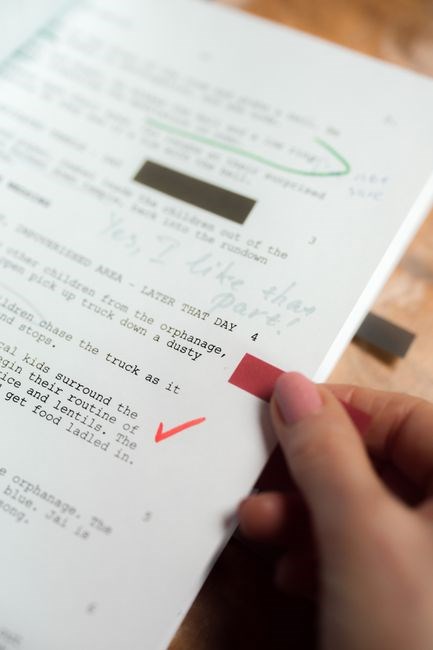
When studying the Matilda script PDF, focus on the lyrical exchanges that drive the narrative. Begin with the opening number, where Miss Honey’s hopeful soliloquy sets the tone, and trace the dialogue that reveals a contrast between the oppressive Trunchbull and the resilient children. Use a highlighter to mark every line that contains a thematic pivot—such as the “I’m a little girl, I’m a little girl” refrain—so you can quickly locate the emotional beats. Create a separate index sheet listing each character’s most memorable lines, noting page numbers and stage directions. This method allows you to revisit critical moments without scrolling through the entire PDF, and it helps you anticipate the rhythm of the performance, ensuring you capture the musicality of Tim Minchin’s lyrics while staying true to Dennis Kelly’s narrative structure.
Annotate stage cues beside highlighted lines; this syncs timing, ensuring emotional beats hit precisely during performance all actors!!.
Analyzing Character Development
In the Matilda script PDF, character arcs unfold through dialogue, stage directions, and musical cues. Begin by mapping each major character—Matilda, Miss Honey, Miss Trunchbull, and the Wormwoods—across the acts. Note the initial motivations: Matilda’s thirst for knowledge, Miss Honey’s longing for stability, Trunchbull’s authoritarian fear, and the Wormwoods’ neglect. Track pivotal scenes where dialogue shifts reveal growth: Matilda’s confrontation with Trunchbull, Miss Honey’s acceptance of her past, and the Wormwoods’ brief moments of empathy. Use color‑coded annotations to link these moments, allowing quick visual reference during rehearsal. Pay special attention to lyrical passages that encapsulate internal change; the “I’m a little girl” refrain marks Matilda’s self‑assertion. Finally, compare the script’s stage directions with the final performance to assess how interpretation affects character evolution, ensuring that the PDF’s textual cues translate into compelling stage presence. Additionally, cross‑referencing the script’s footnotes with the original novel provides deeper insight into character motivations, ensuring fidelity to the source material while allowing creative interpretation for actors.

Resources for Performance Preparation
Use the PDF’s rehearsal notes, cast sheets, and tech specs to align blocking. Study stage directions for lighting cues. Practice scenes with a metronome to match the score. Annotated PDFs for feedback
Rehearsal Guides
The Matilda script PDF is a practical rehearsal tool because it contains the full dialogue, Tim Minchin’s lyrics, and detailed stage directions. Begin by printing or opening the file on a tablet so each actor can highlight their lines. Use the built‑up scene numbers to schedule block rehearsals, focusing first on the opening “Miracle” sequence where Mr. Wormwood’s green hair gag appears. Follow the PDF’s cue sheets for lighting and sound to sync music cues with choreography. Directors often create a “beat‑by‑beat” checklist from the script’s action notes; copy those sections into a separate document for quick reference during run‑throughs. For ensemble numbers, mark vocal entrances and exits with colored tags in the PDF, then practice with a metronome to keep tempo consistent with the original score. Tip. Finally, schedule a “tech read‑through” using the PDF’s technical specifications, allowing the crew to test lighting cues, sound effects, and set changes while actors run their parts.
Casting Notes and Tech Specs
The Matilda script PDF contains comprehensive casting notes and technical specifications. Each role lists vocal range, age, and key personality traits, aiding directors in selecting suitable performers. The PDF’s “Character Sheet” section details costume color codes, prop usage, and suggested blocking. Technical specs are in a separate appendix: lighting cues are numbered per scene, sound effects are time‑stamped, and stage directions specify set movement speeds. This dual focus ensures rehearsals can be scheduled with clear timelines, and the production team can coordinate lighting, sound, and stage mechanics without ambiguity. Following these guidelines, a community theatre can produce a polished, faithful rendition of the musical. When rehearsing producers should consult the PDF’s detailed stage notes, which include precise timing for musical cues, suggested blocking for ensemble numbers, and recommended lighting changes that sync with key lyrical moments, ensuring a cohesive, immersive experience.!!!
Community and Discussion Forums
Forums like Reddit’s r/MatildaMusical, StageAgents, and scriptsharing sites discuss PDF versions, share annotations, offer rehearsal tips for Matilda scriptsPDF.
Online Script Sharing Communities
Online script sharing communities provide a collaborative space where enthusiasts, directors, and actors exchange Matilda script PDFs, annotations, and production insights. Platforms such as ScriptSwap, StageAgents, and the MatildaMusical subreddit allow users to upload vetted PDFs, discuss licensing, and share rehearsal notes. Members often create threads for scene breakdowns, character arcs, and technical requirements, fostering a peer‑review culture that enhances performance quality. These forums also host Q&A sessions with past production teams, offering firsthand advice on interpreting Tim Minchin’s lyrics and Dennis Kelly’s stage directions. By engaging in these communities, users gain access to a wealth of resources—ranging from annotated scripts to digital rehearsal guides—while contributing to a collective knowledge base that supports both amateur and professional productions. These communities also host live workshops, provide rehearsal recordings, and offer peer feedback loops, enriching every production’s depth. daily!
Q&A with Matilda Production Teams
In recent virtual panels, directors from the 2024 West End revival, the 2023 Broadway run, and the 2025 Melbourne transfer shared insights on how the Matilda script PDF informs rehearsal strategy. They highlighted the importance of the embedded stage directions, which clarify the timing of Tim Minchin’s musical cues and Dennis Kelly’s narrative beats. One director explained how the PDF’s annotated margin notes helped actors internalize character. Another producer discussed the legal framework for distributing the PDF, noting that the script remains under the Royal Shakespeare Company’s licensing agreement, yet many theatres obtain a digital license for internal use. These Q&A sessions also covered practical tips for formatting the PDF for handheld devices, ensuring that actors can reference the text during blocking without compromising readability. The collective experience underscores the PDF’s role as both a creative and logistical tool in modern stagecraft.